





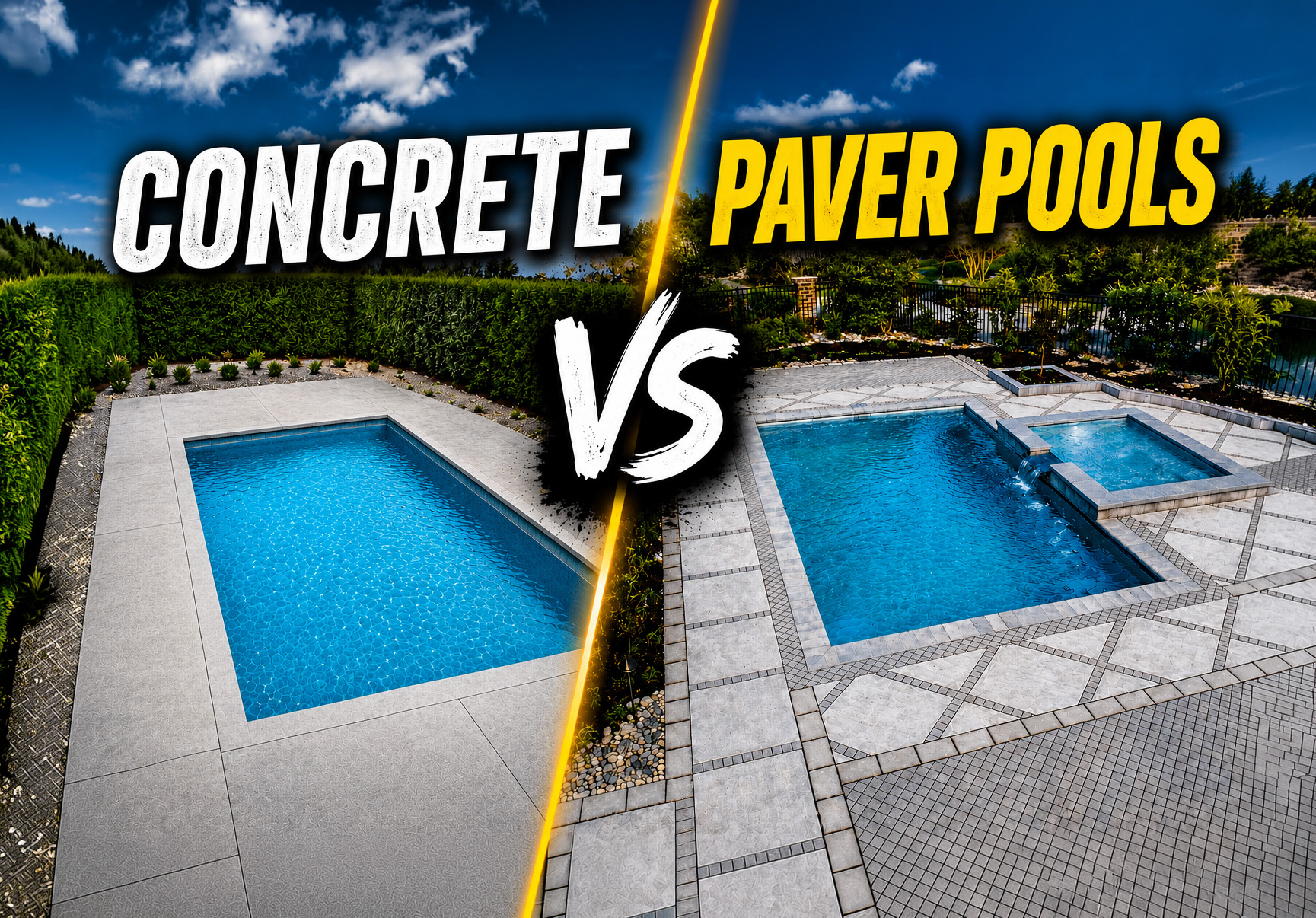
When most people picture their future pool, they picture the water first. They imagine the shape of the pool, a tanning ledge, lighting, or maybe a few water features. What often gets overlooked is the deck surrounding the pool, even though it’s one of the most important parts of the entire backyard.
A pool deck isn’t simply the space around the water. It’s where you’ll walk every day, where patio furniture will sit, where kids will play, and where family and friends will naturally gather. Choosing the right material can have a significant impact on how your backyard looks, feels, and performs for years to come.
If you choose the wrong material, you’ll likely notice it sooner than expected. The surface may become too hot during the summer, slippery when wet, or begin showing cracks over time. In some cases, the deck can even make a beautiful pool feel unfinished.
If you’re deciding between a concrete or paver pool deck, here’s what you should know before making your decision.
Why Your Pool Deck Matters
At first glance, choosing a pool deck material might seem like a simple decision. Once you start comparing cost, maintenance, appearance, repairs, heat retention, and long-term durability, however, it quickly becomes much more important.
At Solid Structures, we’ve helped homeowners throughout Hampton Roads make this decision, and one thing has become clear: there isn’t one perfect answer for everyone. The right choice depends on your budget, your personal style, how you plan to use your backyard, and what matters most over the long term.
While the pool is usually the centerpiece, the deck has just as much influence on the overall appearance of your outdoor space. A well-designed deck makes the entire backyard feel more polished, comfortable, and complete.
It’s also worth remembering that many backyards actually have more deck space than pool space. If the deck begins to crack, looks outdated, becomes uncomfortably hot, or doesn’t complement your home, it often has a bigger impact than homeowners initially expect.
Concrete Pool Decks
Concrete remains one of the most popular pool deck materials, largely because it offers a practical balance between appearance and affordability.
For many homeowners, concrete is the more budget-friendly option upfront, making it a popular choice for those looking to balance appearance and cost. While the cost of the deck depends on factors like size, layout, and materials, concrete generally provides a clean, timeless look that works well with many home styles. Depending on your preferences, it can be finished with a simple brushed texture, enhanced with decorative stamping, or customized with additional finishes to create a more upscale appearance without reaching the cost of pavers.
Stamped concrete has become especially popular because it delivers a higher-end aesthetic while remaining a cost-effective alternative to more expensive materials.
Concrete is also generally faster to install than pavers, which can help keep a project moving forward.
Like any material, however, concrete comes with trade-offs. Over time, cracking is common. Expansion joints help control where cracks occur, but some cracking should still be expected as the material naturally ages.
Heat is another consideration. Darker concrete surfaces can become very hot during the summer months, particularly in Hampton Roads where prolonged sunshine and high temperatures are common. Walking barefoot across a hot pool deck may quickly become uncomfortable.
Repairs can also be more noticeable. If one section becomes damaged, patching or replacing it often creates a visible difference between the repaired area and the original concrete.
Paver Pool Decks
Pavers offer a different set of advantages and are often chosen by homeowners looking for a more custom, upscale appearance.
Available in a wide variety of colors, shapes, textures, and laying patterns, pavers provide significantly more design flexibility than concrete. They can complement everything from traditional homes to modern outdoor living spaces, making it easier to create a backyard that feels unique and cohesive.
Many homeowners also appreciate that pavers tend to stay cooler underfoot than concrete. Around tanning ledges, shallow water areas, and other places where people frequently walk barefoot, that extra comfort can make a noticeable difference during the summer.
Another major advantage is repairability. If a section becomes stained or damaged, individual pavers can usually be replaced without disturbing the rest of the deck. This makes long-term maintenance much simpler and often less noticeable than repairing concrete.
The trade-off is cost. Pavers generally require a higher upfront investment, but in return they offer greater design flexibility, a premium appearance, and easier repairs throughout the life of the deck.
Like concrete, pavers aren’t completely maintenance-free. If they aren’t installed correctly, they may shift over time, weeds can develop between the joints, and uneven settling may occur. In most cases, however, these issues are the result of poor installation rather than the material itself.
What Most Homeowners Don’t Think About
When comparing concrete and pavers, it’s easy to focus only on the material itself. But one of the biggest things homeowners overlook is how the deck fits into the rest of the backyard.
Think about the style of your home, the shape of your pool, the outdoor furniture you already have or plan to buy, and the overall design of you pool deck. How much direct sunlight your backyard gets and the way you plan to use the space should all influence your decision.
Sometimes concrete ends up being the better choice because it fits the budget and complements the overall design. Other times, pavers are worth the extra investment because they provide the appearance, comfort, and flexibility a homeowner is looking for.
In some cases, the best solution is a combination of both. Some homeowners choose pavers around the immediate pool area while using concrete in surrounding spaces to help manage costs without sacrificing the overall look.
There isn’t a one-size-fits-all answer. The best pool deck is the one that fits your backyard, your lifestyle, and still looks great years from now.
Which Pool Deck Is Right for You?
If keeping costs down is your biggest priority, and you want a clean, practical solution, concrete is usually the better fit. It offers a classic appearance, faster installation, and a lower upfront investment, making it a popular choice for many homeowners.
If you’re looking for something that feels more custom, more premium, and easier to repair over time, pavers are often worth the additional investment. Their design flexibility, cooler surface temperatures, and ability to replace individual pavers make them an attractive option for homeowners who plan to enjoy their backyard for years to come.
Ultimately, the decision comes down to what matters most to you.
Is staying within your budget the top priority? Do you want a more upscale look? Would you prefer a surface that’s cooler underfoot during the summer? Or is long-term maintenance and easier repairs more important?
Answering those questions usually makes the right choice much clearer.
Final Thoughts
Choosing between a concrete and paver pool deck is about more than appearance. Your deck plays a major role in how your backyard looks, feels, and functions every day.
Both materials offer their own advantages. Concrete provides a clean, cost-effective solution with plenty of finishing options, while pavers offer greater design flexibility, a more premium appearance, and easier long-term repairs.
The best choice is the one that fits your home, your budget, and the way you plan to use your outdoor space. Taking the time to consider all of these factors before construction begins will help ensure you enjoy your backyard for years to come.
Ready to Design the Perfect Pool Deck?
If a pool is part of your plans in Hampton Roads and you’re trying to decide which deck material is right for your backyard, the team at Solid Structures is here to help.
Browse our available pool shapes and sizes, explore your options, or schedule a design consultation to get started. We’ll help you choose the right deck material, create a layout that fits your space, and design an outdoor living area that looks great today and continues to perform well for years to come.







Outdoor Living Redefined. Solid Structures offers full service design build capabilities all under one roof.
179 S Birdneck Rd
Virginia Beach, VA 23451



© Solid Structures


Follow Us


Hours of Operation
- Mon - Thu: 7:00am – 5:30pm
- Fri - Sun: Closed
-
Weekends by Appointment Only
