





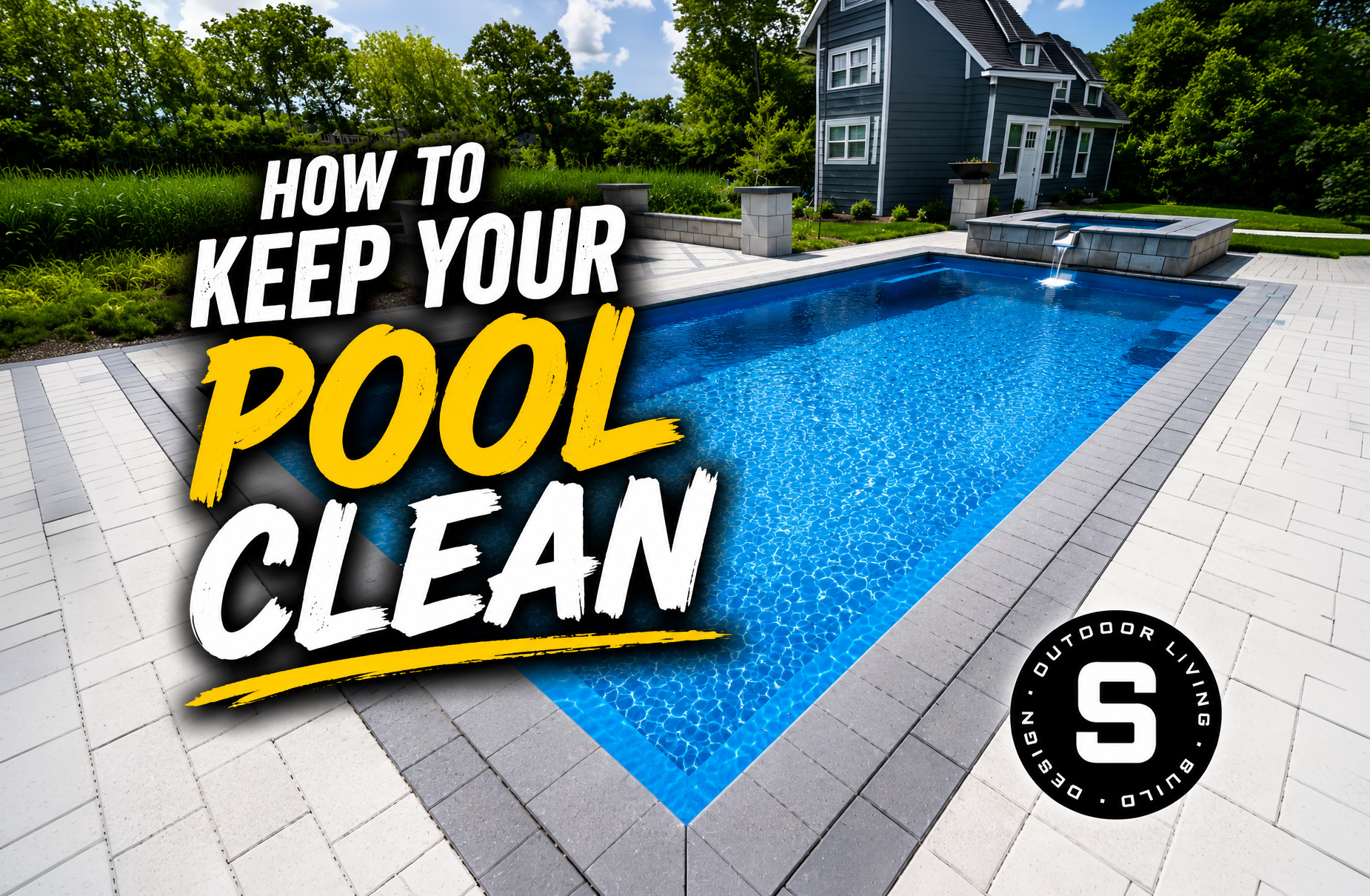
Have you ever noticed how some people always seem to have a perfectly clean pool? Their water is crystal clear, there are no leaves collecting on the bottom, and the pool always looks ready to enjoy. Meanwhile, other homeowners feel like they’re constantly fighting cloudy water, clogged filters, or chemical imbalances that seem to appear out of nowhere.
The truth is, most pool problems don’t happen because something major suddenly breaks. More often, they develop because one or two small maintenance tasks are overlooked for too long. Keeping a swimming pool clean isn’t about spending hours outside every weekend, it’s about knowing what to watch for and staying consistent with a few simple habits.
At Solid Structures, we build swimming pools throughout Hampton Roads, and one of the most common questions homeowners ask is how to keep their pool clean without making it feel like a full-time job. The good news is that a simple weekly routine can make pool maintenance much easier while helping you keep your water clear, balanced, and ready to enjoy all season long.
The First Thing to Check
If your pool water starts looking different, don’t immediately assume something major is wrong. In many cases, the issue starts with something simple, such as a skimmer basket that’s full of leaves, a filter that needs cleaning, chlorine levels that have dropped after several hot days, or a heavy rainstorm that has thrown your pool’s chemistry off balance.
Before you do anything else, take a close look at the water itself. Is it cloudy? Are leaves or debris floating on the surface? Do you notice dirt collecting in the corners, or is the water starting to develop a green tint? Paying attention to these early signs makes it much easier to identify the cause of the problem before it becomes more difficult and more expensive to fix.
The 15-Minute Weekly Pool Cleaning Routine
Homeowners who consistently have clean pools usually aren’t spending hours maintaining them. Instead, they’re following the same simple routine every week.
Start by skimming the surface to remove leaves, bugs, pollen, pine needles, and other debris before it has a chance to sink to the bottom. Once debris settles, it’s more difficult to remove and can affect your pool’s water quality.
Next, vacuum the pool. Whether you use a robotic cleaner or vacuum manually, the goal is the same: remove dirt and debris before it builds up. Staying consistent with this step helps keep your pool looking its best while reducing the amount of work needed later.
After vacuuming, check the water level. Ideally, the water should sit around the middle of the skimmer opening. If the level is too low, the pump can begin pulling in air, which may affect its performance. If it’s too high, the skimmer won’t be able to remove floating debris as efficiently. This is especially important after heavy rainfall, when water levels can change quickly.
Don’t Forget the Equipment
One of the most common mistakes homeowners make is focusing only on what they can see while forgetting about the equipment that keeps the pool running properly.
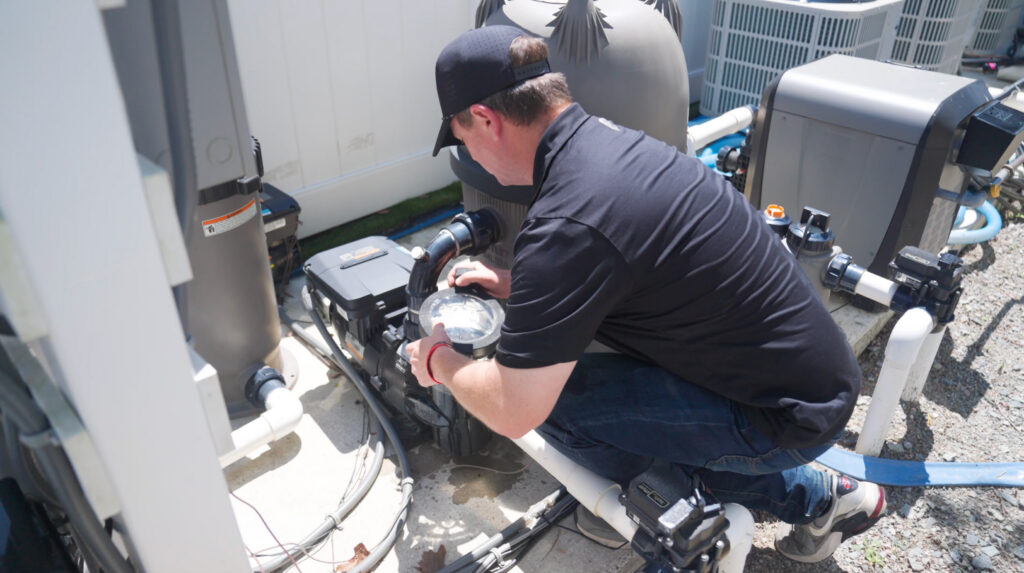
Start by emptying the skimmer basket, then check the pump basket as well. When these baskets become clogged with leaves and debris, water circulation slows down. As circulation decreases, your filter, pump, and overall pool system have to work harder to maintain clean, balanced water.
While you’re at the equipment pad, take a few extra moments to look for anything unusual. Puddles, dripping pipes, strange noises, or unexpected air bubbles can all be early warning signs that something needs attention. Catching these small issues early can often prevent larger repairs and help keep your pool operating efficiently throughout the season.
Why Your Pool Filter Matters
Many homeowners don’t think much about their pool filter until the water starts looking cloudy. In reality, your filter is one of the most important parts of your pool’s circulation system and plays a major role in keeping the water clean.
If the filter is dirty or clogged, it can’t effectively remove dirt, debris, and other contaminants from the water. That means even if you’re skimming the surface and maintaining proper chemical levels, your pool may still look cloudy because the filtration system isn’t doing its job.
The type of filter you have will determine the maintenance it needs. Cartridge filters should be removed and rinsed thoroughly when they become dirty, while sand and DE filters should be cleaned or backwashed according to the manufacturer’s recommendations. It’s also a good idea to monitor the pressure gauge regularly. Once you know what the normal pressure looks like when your filter is clean, you’ll be able to recognize when it’s time for maintenance before water quality starts to suffer.
Understanding Pool Chemistry
Pool chemistry is often the part of maintenance that intimidates homeowners the most, but it doesn’t have to be complicated. You don’t need to memorize dozens of numbers, you simply need to stay consistent and keep an eye on a few key measurements.
At a minimum, you should regularly test your chlorine, pH, alkalinity, and stabilizer levels. As a general guideline, chlorine should remain between 1 and 3 parts per million, while pH should stay between 7.2 and 7.6 for comfortable, balanced water.
Keep in mind that weather and pool usage can quickly change your water chemistry. Heavy rain, several days of hot weather, or a busy weekend with lots of swimmers can all affect your chemical balance. That’s why it’s often a good idea to shock your pool after significant rainfall or periods of heavy use. Staying ahead of these changes helps prevent cloudy water, algae growth, and eye irritation before they become bigger problems.
The Small Maintenance Tasks That Save You Money
Major pool repairs rarely happen overnight. More often, they’re the result of small maintenance issues that were ignored for weeks or even months.
A dirty filter, a clogged skimmer basket, low chlorine levels, poor water circulation, or a low water level may not seem like urgent problems on their own. However, when they’re left unaddressed, they can place unnecessary strain on your pool’s equipment and eventually lead to more expensive repairs.
The good news is that preventing these issues doesn’t require a huge time commitment. By spending just 15 to 20 minutes each week checking your pool, cleaning debris, monitoring your equipment, and testing your water, you can avoid many of the most common maintenance headaches while protecting your investment for years to come. Like any major home investment, understanding the basics of in-ground-pool ownership can also help you make more informed decisions about long-term care.
Final Thoughts
Keeping your swimming pool clean isn’t about working harder, it’s about staying consistent. A simple weekly routine that includes skimming debris, vacuuming, checking the water level, cleaning baskets, maintaining your filter, and monitoring water chemistry can make a significant difference in the appearance and performance of your pool.
By catching small problems early and keeping up with routine maintenance, you’ll spend less time troubleshooting cloudy water and more time enjoying your backyard.
Ready to Build a Pool That’s Easy to Maintain?
If you’re thinking about building a swimming pool in Hampton Roads, Solid Structures can help you design a pool that’s both beautiful and easy to care for over the long term.
Browse our available pool shapes and sizes, explore your options, or schedule a design consultation to get started. We’ll help you create a backyard that’s designed for your lifestyle while making pool ownership as simple and enjoyable as possible.







Outdoor Living Redefined. Solid Structures offers full service design build capabilities all under one roof.
179 S Birdneck Rd
Virginia Beach, VA 23451



© Solid Structures


Follow Us







Hours of Operation
- Mon - Fri: 8:00am – 5:00pm
- Sat - Sun: Closed
-
Weekends by Appointment Only
